
Can Diabetic Neuropathy Be Reversed? What People With Diabetes Need to Know
Diabetic neuropathy can cause burning, tingling, numbness, sharp pains, or unusual sensations in the feet and hands. For someone who has recently developed these symptoms, one of the most important questions is: can diabetic neuropathy be reversed?
The answer is more nuanced than a simple yes or no.
In some cases, symptoms can improve substantially—especially when diabetic neuropathy is identified early and the factors contributing to nerve damage are addressed. However, established nerve damage may not be completely reversible. The most important goal is to prevent additional nerve damage while giving the nerves the best possible opportunity to recover.
Understanding what diabetic neuropathy is, what causes it, and what can realistically improve symptoms can help you make better decisions about your diabetes care.
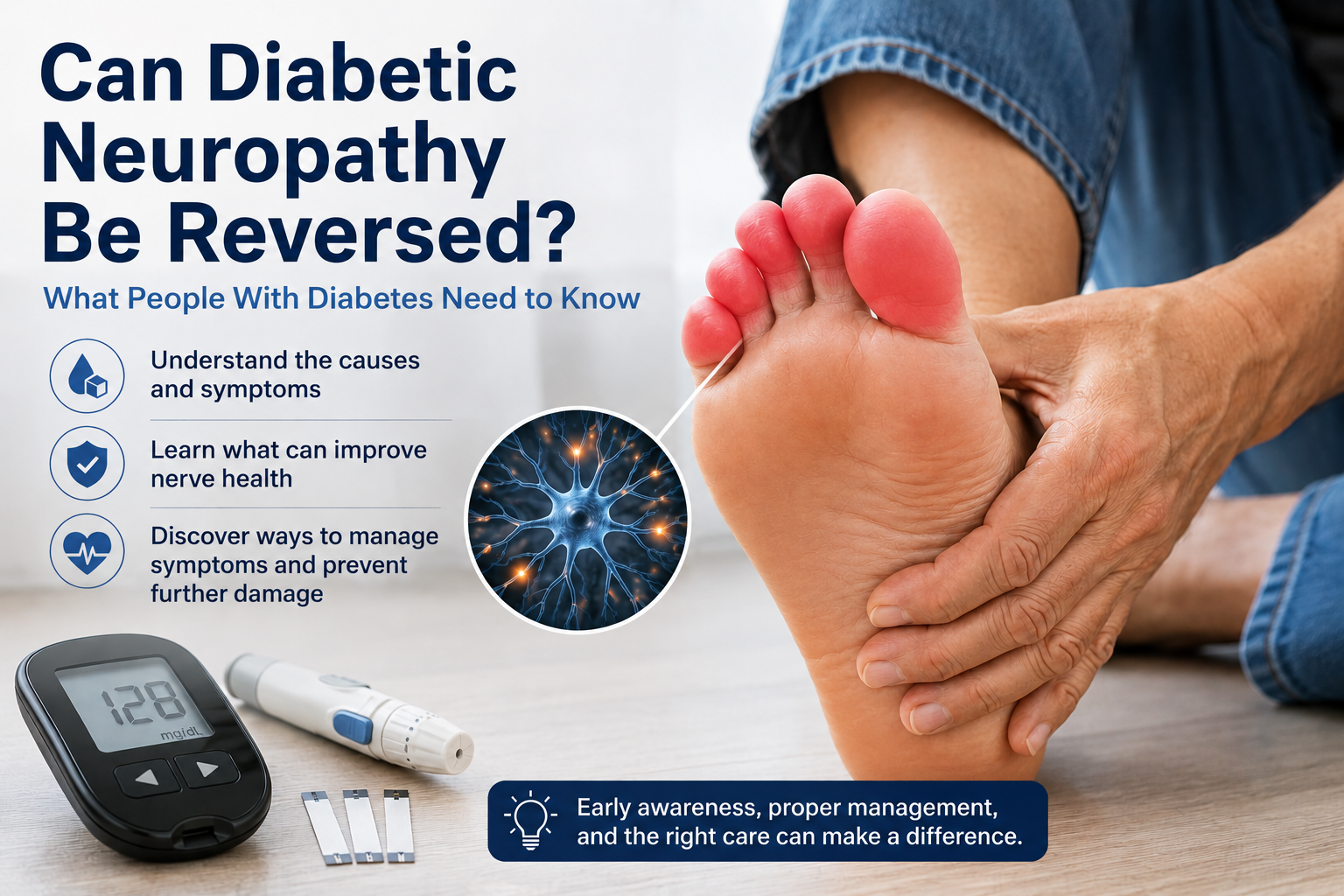
What Is Diabetic Neuropathy?
Diabetic neuropathy is nerve damage associated with diabetes and prolonged exposure to elevated blood glucose levels. The condition can affect different nerves throughout the body, but peripheral neuropathy, which commonly affects the feet and legs, is one of the most common forms.
Symptoms may include:
- Burning or tingling in the feet
- Numbness or reduced sensation
- Pins-and-needles sensations
- Sharp, shooting, or electrical pain
- Increased sensitivity to touch
- A feeling of walking on something soft or uneven
- Loss of awareness of temperature or minor injuries
Some people experience symptoms on both sides of the body, particularly in the feet, in a pattern sometimes described as "stocking" distribution. Diabetic neuropathy isn't simply a problem with how your feet feel. Reduced sensation can make it harder to notice blisters, cuts, burns, pressure points, or other injuries.
Can Diabetic Neuropathy Be Reversed?
Sometimes diabetic neuropathy can improve, but complete reversal isn't guaranteed.
The likelihood of improvement depends on several factors, including:
- How early the neuropathy is identified
- How much nerve damage has occurred
- Blood glucose control over time
- The underlying cause of the nerve symptoms
- Whether other factors are contributing to nerve damage
- Overall cardiovascular and metabolic health
- How long diabetes has been present
Early-stage neuropathy may have a better chance of improving than long-standing nerve damage. In other situations, treatment may primarily focus on preventing the condition from progressing and managing symptoms.
This distinction is important. "Reversing neuropathy" doesn't necessarily mean making every symptom disappear. For some people, meaningful improvement may mean less burning, better sensation, less pain, or preventing further loss of nerve function.
Can Nerve Damage From Diabetes Heal?
Peripheral nerves have some capacity for repair, but the body's ability to recover depends heavily on the severity and cause of the damage. Persistent high blood glucose can contribute to biochemical and vascular changes that impair normal nerve function. Over time, these processes can damage both the nerves themselves and the small blood vessels that supply them.
Improving diabetes management can reduce one of the major contributors to ongoing nerve injury. However, improvement isn't necessarily immediate. Nerves generally recover slowly, and symptoms can sometimes fluctuate during treatment. A change in symptoms doesn't automatically mean that nerve damage is getting worse or better, which is why proper medical evaluation is important.
Why Blood Sugar Matters for Diabetic Neuropathy
Blood glucose management is one of the central components of protecting nerves in people with diabetes.
Repeated or prolonged periods of elevated blood glucose can increase the risk of nerve damage. At the same time, glucose management needs to be individualized. Attempting to make dramatic changes without medical guidance can create other problems, particularly episodes of low blood sugar. For someone with neuropathy symptoms, a healthcare professional may evaluate:
A1C and glucose patterns
A1C provides an estimate of average blood glucose over roughly the previous two to three months. Daily glucose readings and, when appropriate, continuous glucose monitoring can provide additional information about fluctuations and patterns.
Other health factors
Blood pressure, cholesterol, kidney function, weight, smoking, physical activity, and other cardiovascular risk factors can also matter because healthy blood vessels are important for nerve health.
Medication and treatment changes
Diabetes medications sometimes need to be adjusted as circumstances change. Any medication changes should be discussed with the prescribing healthcare professional.
What Else Can Cause Neuropathy?
Not every case of numbness, burning, or tingling in the feet is necessarily caused by diabetes.
Other potential contributors include:
- Vitamin B12 deficiency
- Certain medications
- Alcohol use
- Kidney disease
- Thyroid disorders
- Nerve compression
- Certain infections
- Other neurological conditions
This is one reason a professional evaluation is important. If you have diabetes and suddenly develop unusual nerve symptoms, it can be tempting to assume that diabetes is automatically responsible. A healthcare professional can determine whether additional testing is appropriate.
Can Diabetic Neuropathy Symptoms Improve?
Yes, symptoms can improve in some people, although the degree of improvement varies considerably.
Treatment generally has two broad objectives:
1. Address the underlying cause
For diabetic neuropathy, this can include improving diabetes management and addressing other factors that may contribute to nerve damage. If testing identifies another contributor—such as vitamin B12 deficiency—that issue may also need to be addressed.
2. Manage symptoms and protect the feet
Painful neuropathy may require specific treatments prescribed by a healthcare professional. Depending on the circumstances, treatment can include medications designed to reduce nerve pain. Foot protection is equally important. Reduced sensation means that an injury can sometimes occur without being noticed. Regular foot checks, appropriate footwear, and prompt attention to wounds can help reduce the risk of complications.
How Long Does It Take for Diabetic Neuropathy to Improve?
There isn't a universal timeline. Some people notice changes relatively quickly after addressing an underlying problem, while nerve symptoms may persist for months or longer in others. The severity and duration of nerve damage are important factors.
It's also possible for symptoms to change during treatment without indicating that the nerves have fully recovered. Because neuropathy is a complex condition, improvement should be evaluated over time rather than judged from a single day or week.
When Should You See a Doctor About Neuropathy?
Talk with a healthcare professional if you experience persistent:
- Numbness
- Burning
- Tingling
- Sharp or shooting pain
- Loss of sensation
- Muscle weakness
- Balance problems
You should also promptly address foot wounds, infections, burns, or injuries that don't heal normally. Sudden or severe neurological symptoms—particularly symptoms such as sudden weakness, difficulty speaking, facial drooping, or other signs of a potential emergency—require immediate medical attention.
Frequently Asked Questions About Reversing Diabetic Neuropathy
Can diabetic neuropathy go away completely?
It can improve significantly in some people, particularly when identified and addressed early, but complete reversal isn't guaranteed. Long-standing nerve damage may be permanent.
Can you reverse diabetic neuropathy naturally?
There isn't one natural remedy proven to reverse established diabetic nerve damage. Healthy lifestyle habits and appropriate diabetes management can support overall health and help reduce factors that contribute to progression, but treatment should be based on the individual's medical situation.
Can controlling blood sugar reverse neuropathy?
Improving blood glucose management can help reduce ongoing nerve damage and may improve symptoms in some people. However, established nerve damage doesn't necessarily disappear simply because blood glucose improves.
How do you know if diabetic neuropathy is getting better?
Improvement may involve reduced burning or tingling, less pain, improved sensation, or stabilization rather than complete disappearance of symptoms. Your healthcare professional can help assess changes in nerve function.
Does diabetic neuropathy always get worse?
No. Neuropathy doesn't inevitably progress in every person. Managing diabetes and other contributing health factors can help reduce the risk of additional nerve damage.
Can diabetic neuropathy affect your hands?
Yes. Although diabetic peripheral neuropathy commonly begins in the feet, it can eventually affect the hands and arms.
The Bottom Line: Can Diabetic Neuropathy Be Reversed?
So, can diabetic neuropathy be reversed?
Sometimes symptoms can improve considerably, particularly when the condition is identified early and contributing factors are addressed. But established nerve damage isn't always completely reversible. The most important steps are to identify the cause of your symptoms, work with your healthcare professional on appropriate diabetes management, protect your feet, and address other potentially treatable contributors.
At Cash For Diabetic Supplies Buffalo, we know that people with diabetes often accumulate supplies they no longer need after changing medications, glucose monitors, or treatment plans. If you have unopened, eligible diabetic supplies that you no longer need, we buy qualifying supplies for cash in the Buffalo area.
Have extra diabetic supplies sitting around? Contact us to learn what we currently buy and request a fast, no-obligation quote.